

Top 10 Outsourcing Myths That Are Holding Your Business Back
Even as the practice continues to evolve, myths about outsourcing still shape decisions in boardrooms and business plans. Moving past these misconceptions helps businesses stop playing defense and start building smarter, more resilient workforce strategies.
Debunking Common Myths About Outsourcing and Remote Work
With the industry projected to reach $7.11 trillion by 2030, the old assumptions no longer reflect today’s reality. That shift is prompting leaders to rethink how they protect and grow their companies, even when it means questioning approaches that once felt unfamiliar or high-risk. Below, we address the most common myths we hear about outsourcing.
Myth #1: Outsourcing Is Just a Temporary Fix
Outsourcing is often seen as a way to cover short-term needs, like filling gaps during peak seasons or when someone unexpectedly leaves. This idea likely comes from early models, where external support was brought in for quick, task-based work.
Reality: Outsourcing Works Best as a Long-Term Strategy
With a strategic approach, outsourcing builds continuity into roles that would otherwise see high turnover or go unfilled entirely. This leads to stronger team integration, better knowledge retention, and more consistent results over time.
Myth #2: Handing Off Work Means Giving Up Control
One of the most persistent fears about outsourcing is losing control over how work gets done. Delegating key functions to an external team can understandably raise questions about visibility, influence, and quality standards.
Reality: The Right Model Keeps You in Charge
In legacy BPO models, visibility is limited and communication often feels one-way, but that’s not your only option. With the right outsourcing setup, you gain more clarity and involvement, not less. The Emapta Talent Marketplace gives you direct visibility into candidate profiles and lets you choose exactly who joins your team, define their priorities, and maintain direct communication throughout. Paired with real-time collaboration tools and performance reporting, you stay closely connected to your offshore or nearshore team.
Myth #3: Cost Reduction Is the Only Reason to Outsource
When companies think about outsourcing, the first thing that usually comes to mind is headcount savings or reduced overhead. This makes sense, especially when internal teams are stretched and local hiring gets expensive, but it also leads to the assumption that outsourcing is only worth exploring when budgets are tight.
Reality: The Real Value of Outsourcing Goes Beyond Cost
Four years ago, 70% of organizations cited cost savings as the main reason for outsourcing. Today, that number is down to just 34%. Talent shortages and rising customer demands are now just as important, if not more so.
Our partners often save up to 70% on labor costs but that’s only part of the story. We help businesses access top-tier talent, scale faster, stay agile in competitive markets, and build long-term capability.
Myth #4: Outsourced Teams Aren’t as Skilled
Another common misconception is that the quality of talent is lower than what you’d find locally, that nearshore and offshore professionals lack the same training, licensing, or experience, and that outsourcing means settling for “good enough” rather than hiring the best.
Reality: Skill Isn’t Tied to Location
Today’s businesses increasingly use outsourcing to access specialized skills, overcome talent shortages, and build more agile teams, not just to reduce costs. Everest Group’s 2025 report found that accessing specialized talent is now among the top drivers of outsourcing, cited by 60% of enterprises.
To meet that need, Emapta sources the top 1% of highly skilled talent, trained to work with industry-leading AI tools for greater productivity and efficiency, from some of the world’s most established talent hubs, including the Philippines, Colombia, North Macedonia, India, Sri Lanka, Vietnam, Malaysia, and the Dominican Republic. This means you’re choosing from a deep talent pool that’s qualified, capable, and ready to deliver from day one.
Myth #5: Your Data Isn’t Safe with Remote Work
When teams operate outside your physical office, especially across borders, concerns about data security naturally grow. Many businesses worry that remote or offshore setups increase exposure to breaches, noncompliance, or lapses in privacy protocols.
Reality: Top Providers Invest in World-Class Data Security
The best outsourcing companies design their infrastructure with security at the core, so data protection isn’t a feature but the foundation, backed by strict access controls and fully documented protocols. Emapta is ISO 27001-certified, GDPR-compliant, and uses enterprise-grade tools across every touchpoint. Our global offices, including 16 in the Philippines are built for both productivity and security, with systems that meet the highest international standards.
Myth #6: Outsourcing Is Only for Non-Core Tasks
Another myth is that outsourcing is only suitable for admin work or back-office support. Roles that drive strategy or revenue are often seen as too critical to entrust to an external team, so they stay in-house.
Reality: High-Skill, Specialized Roles Can Be Outsourced
Outsourced professionals can meet global standards with the right credentials and experience, even in highly regulated industries such as finance and accounting, engineering, healthcare support, and legal. According to Everest Group, 48% of enterprises already outsource high-skill roles. This trend is expected to continue, with 57% planning to increase outsourcing for high-skill positions and 46% planning to expand the outsourcing of managerial roles.
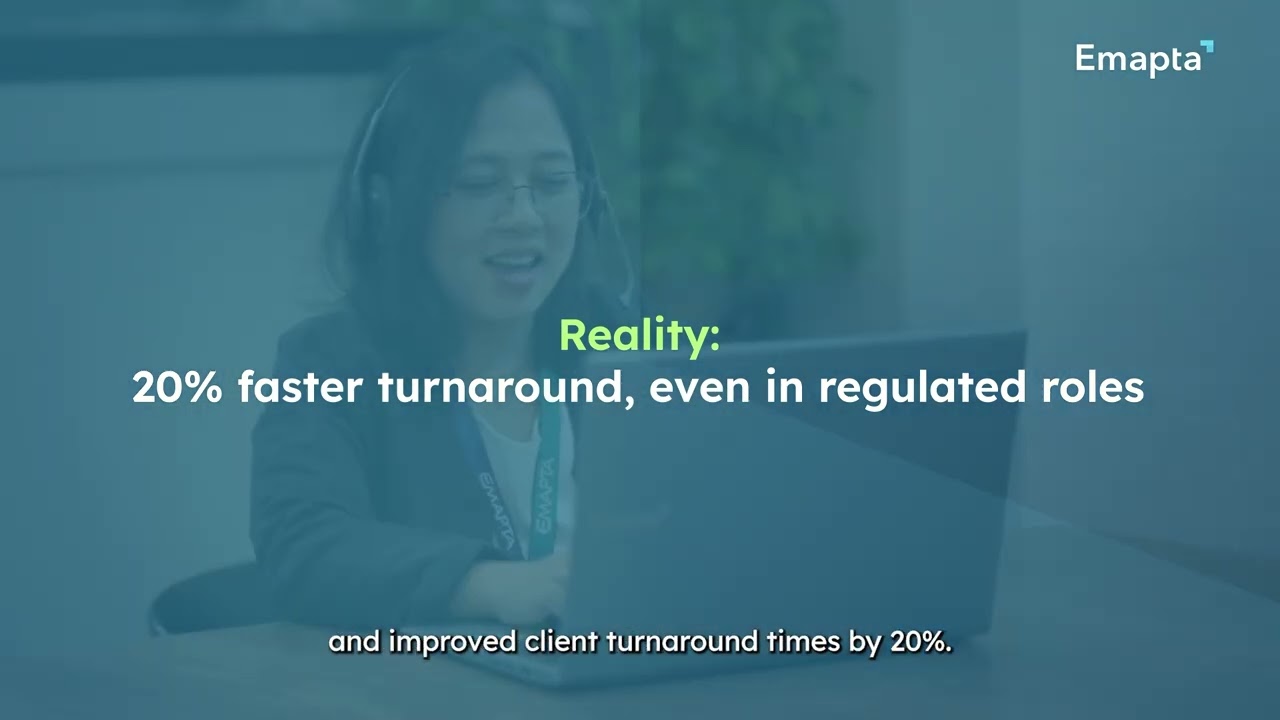
HLB Mann Judd, a multi-office advisory and accounting firm operating across Australia, New Zealand, and Fiji, put this to the test when it launched an internal initiative to get ahead of rising talent pressures. After a rigorous evaluation of offshore options, the firm partnered with Emapta, starting with a single division and scaling to dedicated offshore teams across the entire business within 18 months. The results included a utilization rate above 75%, client turnaround times improved by 20%, an NPS score above 80, and attrition below 5% since 2023, proof that specialized, client-facing finance and accounting work can thrive offshore without compromising quality.
Myth #7: The Transition Process Will Be Disruptive
For leaders already juggling tight timelines and competing priorities, coordinating a remote team can feel like an added strain on limited resources. In larger enterprises with layered systems and processes, the stakes feel even higher.
Reality: The Shift Can Be Seamless When Properly Managed
With the right rollout plan covering knowledge transfer, system alignment, and collaboration workflows, you can onboard remote staff without draining internal resources or losing momentum. When you partner with Emapta, client experience managers, onboarding specialists, and IT experts work together to guide the transition, integrating new team members smoothly into your day-to-day operations.
Myth #8: Cultural Differences Will Get in the Way
Some companies hesitate to outsource because they’re concerned about language, work habits, or values not aligning across borders, with a belief that cultural gaps will lead to friction between outsourced and in-house teams on business-critical tasks.
Reality: Diversity and Alignment Can Go Hand in Hand
By setting clear communication guidelines and shared expectations, collaboration can run smoothly across borders, and a multicultural team can become a strategic advantage, bringing in new perspectives that fuel creativity and innovation. We help lay the groundwork for this alignment from day one with tailored onboarding, hands-on client experience managers, and comprehensive cultural training, so differences become strengths that enhance your team’s performance.
Myth #9: Outsourcing Only Makes Sense for Big Companies
Smaller businesses sometimes dismiss outsourcing, thinking it’s only for large enterprises with big budgets and complex needs. That misconception can keep them from exploring how global support could accelerate their growth.
Reality: Outsourcing Works for Companies of All Sizes
Early-stage startups, mid-sized firms, and growing enterprises can all benefit from tapping into global talent to stay competitive without overextending internal teams. Our flexible model adapts to your needs with no minimum hires, no rigid long-term contracts, and transparent pricing with no hidden fees, so whether you’re running lean or scaling fast, you get exactly what you need, on your terms.
Myth #10: Employee Welfare Isn’t a Priority
Concerns about employee treatment can make some businesses wary of outsourcing. Stories of substandard environments, unethical practices, or lack of support have led to the perception that outsourced teams are undervalued or overworked.
Reality: Today’s Best Global Teams Are People-Driven
Leading outsourcing providers prioritize employee wellbeing, from fair compensation and safe facilities to continuous development and mental health support, as holistic workforce care becomes the standard. At Emapta, our team’s welfare is at the heart of everything we do, through investment in premium workspaces, competitive benefits, and ongoing upskilling through The Emapta Academy. We’re proud to be consistently recognized as one of HR Asia’s Best Companies to Work. Emapta’s strong focus on employee well-being has contributed to an industry-leading attrition rate of under 2%.
Rethink What’s Possible with Global Teams
Holding on to outdated ideas about outsourcing can keep you from experiencing what’s truly possible with your workforce. Specialized talent, flexible contracts, and scalable support are all within reach, especially with a partner like Emapta. When you break free from these myths, you might uncover opportunities to transform workflows, strengthen capabilities, and move your business forward in ways you hadn’t imagined.
Learn More About Our Expertise
Get a quick overview of Emapta’s credentials and capabilities, the foundation that helps our partners turn common outsourcing concerns into strengths.