
The Rise of High-Skill Outsourcing
For decades, outsourcing followed a familiar logic: take repetitive, rules-based work, move it to a lower-cost location, and capture the efficiency.
That model has not disappeared. But it no longer describes where outsourcing is heading.
The crucial shift is happening further up the skills ladder. Enterprises are increasingly looking beyond transactional capacity and using global talent models to access engineers, finance professionals, AI practitioners, client-facing experts, and even managerial and leadership talent.
As AI reshapes routine work and specialized skills become harder to secure, outsourcing is moving higher up the value chain.
The question is no longer simply where work can be done more efficiently, but where businesses can find the expertise they need and how they can integrate that talent effectively.
Outsourcing Is Moving Beyond Cost
Transactional work still has an important place in outsourcing. But it’s no longer where the model ends.
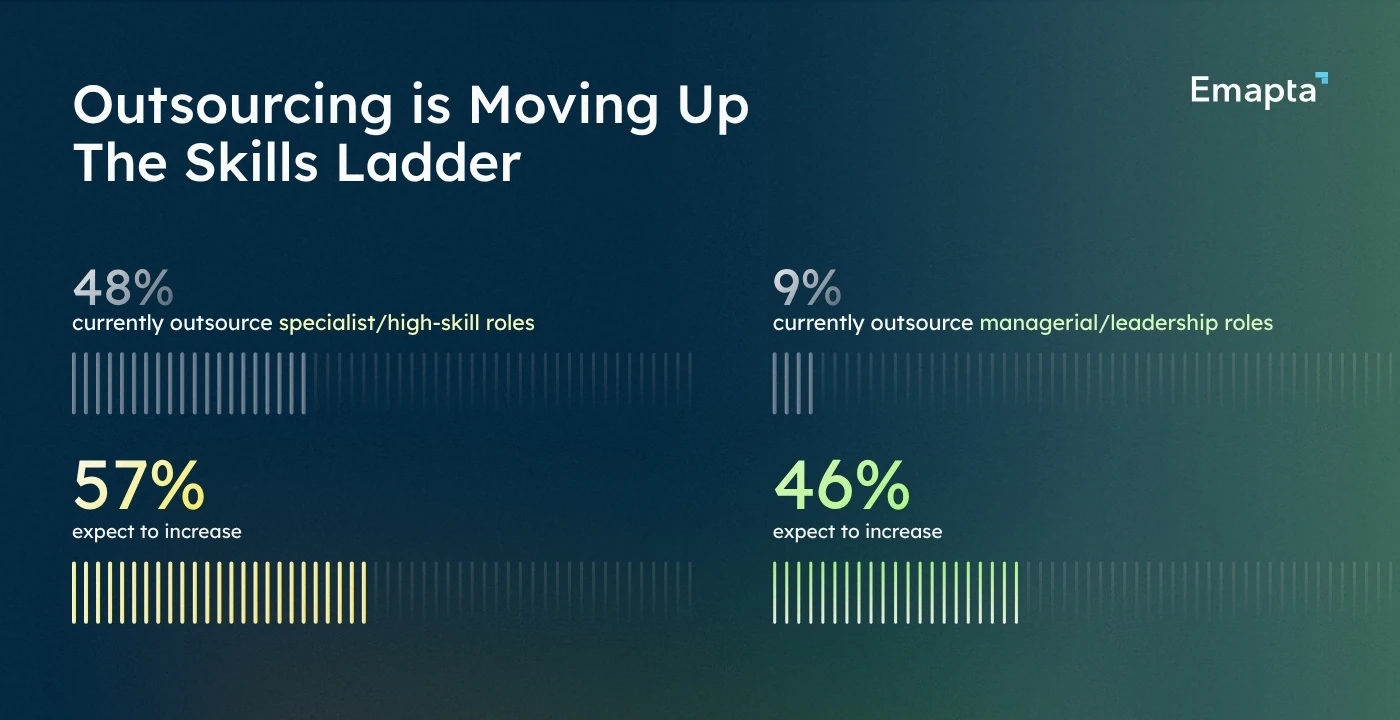
Everest Group research found that 48% of surveyed North American enterprises already outsource specialist or high-skill roles, and 57% expect to increase their use over the next 12 to 18 months.
The shift is beginning to reach leadership as well: while only 9% currently outsource managerial or leadership roles, 46% expect to increase outsourcing in this category.
These numbers point to a broader change in how businesses think about global talent. Companies are becoming more comfortable building teams around expertise, not just location or cost.
Everest describes this progression as moving beyond entry-level work toward roles that require “Contextual understanding, collaboration, and domain expertise.”
That does not mean routine roles are disappearing from global teams. Instead, the range of work companies are willing to build globally is expanding.
As automation and AI take on more repeatable tasks, businesses can look beyond execution and consider where global specialists can bring analysis, technical depth, judgment, and accountability.
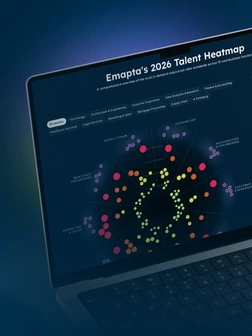
Emapta’s 2026 Talent Heatmap, a comprehensive overview of the most in-demand outsourced roles worldwide across 10 core business functions, shows what that looks like at the role level. Emerging global roles now include AI-augmented FP&A Analysts in finance; AI Design Engineers in engineering; Cloud Engineers in technology; S&OP Managers in supply chain; and Analytics Automation Architects in data.
These are not simply more senior versions of traditional back-office roles. Many require professional judgment, technical depth, stakeholder interaction, or direct responsibility for business outcomes.
That’s the bigger shift: geography is becoming less of a boundary for building specialized, high-value teams.
AI Is Changing the Work, Not Eliminating the Talent
AI is one of the strongest forces pushing outsourcing in this direction.
As AI takes on more predictable and repetitive work, the economics of moving large volumes of routine human tasks from one country to another become less compelling.
If software can perform part of a process, there are fewer tasks to execute in the first place. But that does not mean the need for external talent disappears.
A finance team may automate reconciliation and reporting steps while increasing the importance of analysis, controls, and business partnering. A customer operation may automate simple interactions while putting a premium on escalation management, customer strategy, and complex problem-solving. A technology team may use AI to generate routine code while needing more architecture, cybersecurity, integration, and governance capability.
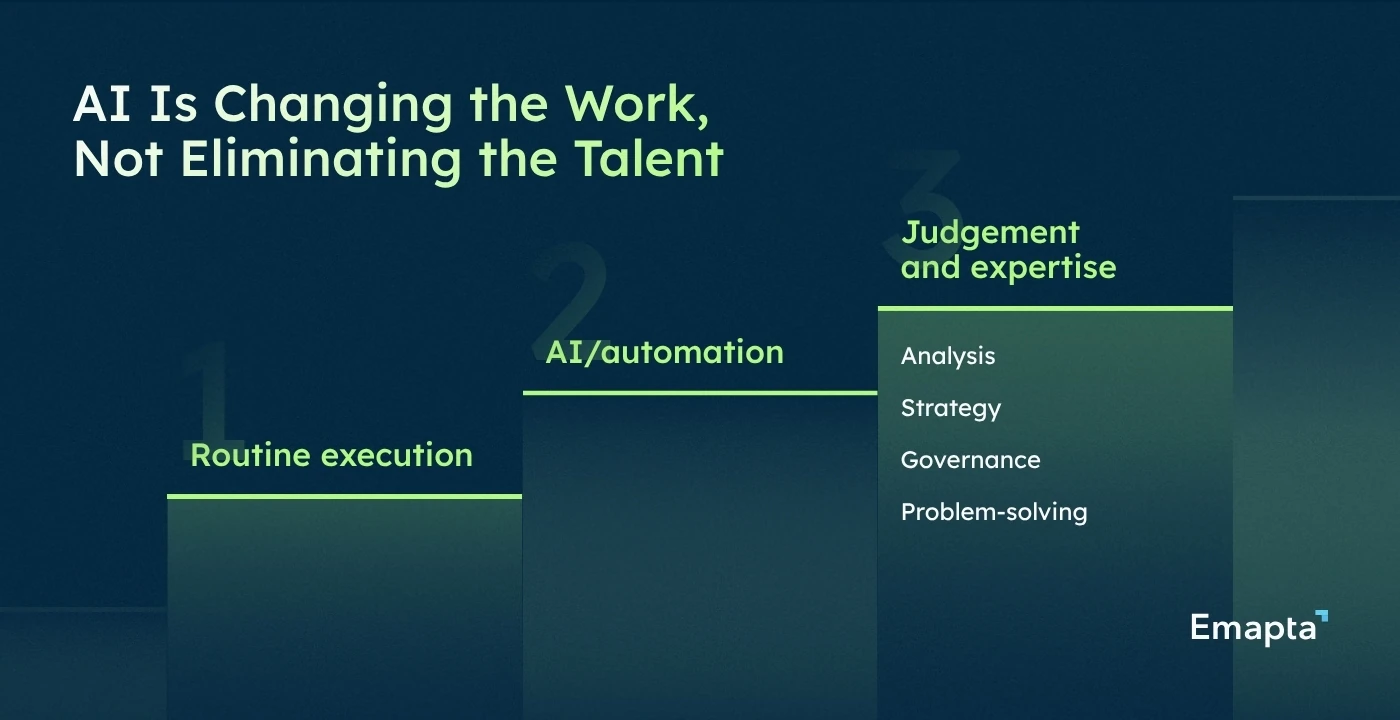
That creates an important distinction between work being automated and work becoming unnecessary. The value moves upward, from execution alone toward judgment, orchestration, and expertise.
PwC’s 2025 Global AI Jobs Barometer provides an indication of this repricing of skills. The research found that skills requested by employers were changing 66% faster in the jobs most exposed to AI.
Moreover, workers with AI skills obtained an average 56% wage premium in 2024, while industries most exposed to AI recorded substantially faster growth in revenue per employee.
In other words, AI is not making expertise irrelevant. In many areas, it’s making the right expertise more valuable.
Talent Scarcity Is Turning Outsourcing into a Capability Strategy
There is another force pushing companies up the outsourcing value chain: they often cannot find enough of the skills they need locally.
A 2026 ManpowerGroup’s survey of 39,000 employers across 41 countries found that 72% were having difficulty filling roles. For the first time in its survey, AI capabilities overtook engineering and traditional IT as the hardest skills to find.
This changes the business case for global talent.
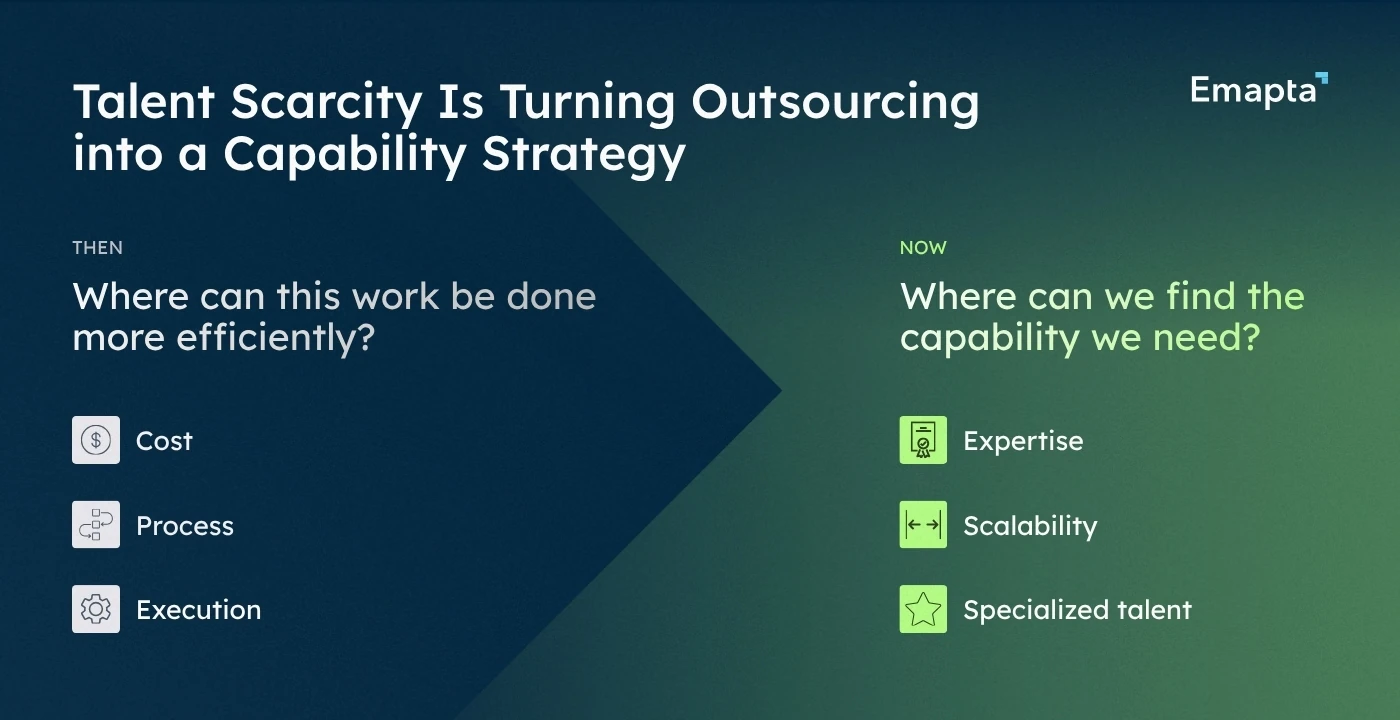
When outsourcing was primarily about repetitive work, the fundamental question was often: Where can this process be performed more efficiently?
Now that companies go global to fill highly specialized roles they can’t find locally, the question has transformed into: Where can we find the capability we need?
Those are very different workforce decisions.
Cost remains relevant, but now so are flexibility and scalability, access to specialized talent, alignment with business strategy, and process optimization.
That’s why the next stage of outsourcing is better understood as a capability strategy rather than a simple cost strategy: organizations are expanding the geographic market where they seek scarce expertise.
Global Talent Is Moving Closer to the Business
The functional mix tells the same story. Nearly 60% of the enterprises surveyed by Everest Group already outsource three or more business functions. IT and technology services were outsourced by nearly 67% of respondents, while data and analytics had reached 43%.
Looking ahead, the research anticipates particularly strong increases in outsourcing penetration across supply chain, data and analytics, sales and business development, and finance and accounting.
That matters because these functions increasingly sit close to decision-making and value creation. An FP&A professional can shape resource allocation. An engineer can influence product development. A customer success manager can influence retention and revenue.
The Emapta Talent Heatmap reinforces this progression. Alongside established outsourced positions, its emerging-role section identifies high-value positions such as AI Compliance Auditor, Generative AI Architect, or Sales & Operations Planning Manager.
The common denominator is not that these jobs are easy to relocate. It’s that organizations increasingly have the infrastructure, collaboration tools, and workforce models to make location less important than capability.
Leadership Shows How Far Outsourcing Has Evolved
The movement into management deserves particular attention. Nine percent of current adoption might appear modest. But managerial and leadership positions are arguably the category furthest removed from the traditional conception of outsourcing.
That 46% of surveyed enterprises in the Everest report expect to increase outsourcing in this category over the next 12 to 18 months is therefore significant.
It suggests that the paradigm is shifting from which tasks can be outsourced? toward which capabilities need to be managed in the same place?
For some leadership positions, location will remain essential. Regulatory requirements, executive relationships, sensitive decision-making, or the nature of a role may make local presence important.
But many management responsibilities, team leadership, project ownership, technical supervision, functional expertise, performance management and cross-functional coordination, are already performed across distributed organizations.
Once companies become comfortable operating distributed internal teams, the conceptual distance between a senior employee in another city and a dedicated global team leader in another country becomes much smaller.
But as outsourcing moves into leadership and other complex roles, how those professionals are integrated and managed becomes just as important as finding the right talent.
High-Skill Outsourcing Requires a Different Management Model
You can outsource a tightly scripted transaction through a tightly scripted process. You cannot manage a Controller, AI engineer, or senior analyst in exactly the same way.
Knowledge workers need context. Specialists need access to systems and stakeholders. Senior talent needs career progression and enough continuity to develop institutional knowledge. Managers need authority.
The provider relationship therefore has to evolve alongside the roles.
Everest Group’s research found dedicated staffing gaining traction specifically in knowledge-driven and collaborative functions such as IT, engineering, finance and accounting, data and analytics, and marketing.
Moreover, 49% of surveyed enterprises already use dedicated staffing, and another 35% plan to adopt it within 12 to 18 months. Access to specialized, high-quality talent was the most commonly cited driver for the model.
That doesn’t mean one workforce model is right for every organization. It does indicate why higher-skill outsourcing places a greater premium on integration, transparency, and control.
As external talent takes on more critical work, businesses need greater visibility, closer collaboration, and stronger integration, common benefits of building dedicated global teams.
The Outsourcing Value Chain Is Expanding
None of what we’ve just analyzed means transactional outsourcing is disappearing. Entry-level and operational work will remain an important part of the global talent market. The difference is that they no longer define its ceiling.
Companies can now think more broadly about what they build globally, from support and processing roles to analysts, engineers, compliance professionals, managers, and other specialists.
As AI absorbs more routine tasks and specialized talent becomes harder to secure, outsourcing is moving higher into the organization: from capacity toward capability, from transactions toward expertise, and increasingly from execution toward judgment and leadership.
The biggest change in outsourcing, then, may not be where the work is going. It’s what kind of work businesses are now willing to build globally.
Explore the most in-demand outsourced roles worldwide across 10 core business functions