
Enterprise Guide to Building a Global Workforce Strategy
Global hiring is no longer just about filling positions in other countries. For enterprises, building a global workforce means developing a coordinated strategy that accounts for talent needs, risk management, governance, and long-term growth.
When done right, this can help your organization build more resilient operations, access critical skills, and respond faster to changing market demands. Let’s take a look at the key considerations and practical steps involved so you can build a global workforce that’s ready for the future.
What Is a Global Workforce Strategy?
A global workforce strategy is an organization’s long-term plan for building and supporting teams across multiple countries. It focuses on having the right people, skills, and capacity in the right locations to support broader business goals. This typically involves:
- Team design
- Location selection
- Talent sourcing and hiring
- Workforce management
- Employment compliance
- Employee development and retention
At the enterprise level, this means moving beyond isolated hiring and employment decisions in each country to account for the needs of multiple business units. This calls for a coordinated approach to global workforce planning that still allows for differences in local regulations and labor market conditions.
In practice, enterprise’s global teams can bring together directly hired employees across different countries and offshore or nearshore professionals hired through outsourcing. Depending on the arrangement, responsibilities for recruitment, payroll, and day-to-day management may differ.
Why Does an Enterprise Build a Global Workforce?
Looking beyond a single labor market gives enterprises more options for meeting their hiring and operational needs. It can help them fill hard-to-hire roles, manage labor costs, and extend coverage across time zones. Having people in different countries can also support international expansion and provide greater flexibility as demand changes.
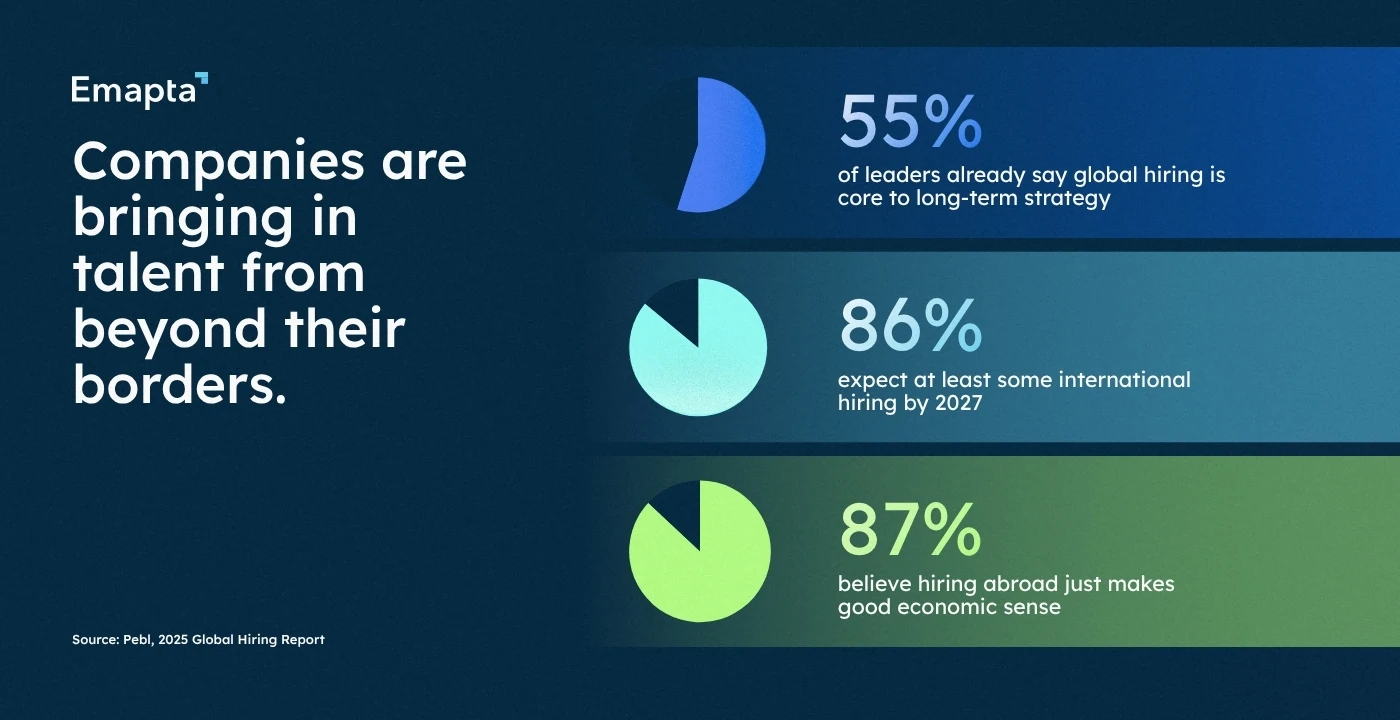
The appeal of building teams across borders also extends beyond immediate staffing needs. According to a report from Pebl, 55% of surveyed HR and finance leaders say global hiring is already core to their long-term workforce strategy, while 86% expected to make at least some hires abroad by 2027.
What Should a Global Workforce Strategy Include?
A well-designed strategy should establish how local and international team members fit into the wider enterprise while allowing enough flexibility to support workforce transformation as business needs change.
After all, what works for a handful of overseas hires may become difficult to manage across multiple countries, business units, and employment arrangements. That calls for a clear approach built around a few key elements.
1. Workforce Design and Team Structure
Within a global talent strategy, workforce design and team structure determine how roles, skills, and responsibilities are distributed across countries and different parts of the enterprise. This includes deciding which roles remain in-house, which can be supported through outsourcing, and how all teams fit together under one organizational framework.
2. Governance and Security Measures
Managing a global workforce requires clear governance structures that define decision-making authority, accountability, and oversight across locations. This involves establishing reporting lines, consistent policies, and management responsibilities.
These structures also provide the foundation for security measures, including data access controls, information protection protocols, and compliance with enterprise-wide security standards.
3. Regulatory Compliance
Employment laws and regulations vary by jurisdiction, making regulatory compliance essential to cross-border workforce management. Enterprises must account for local requirements covering employment contracts, wages and benefits, working hours, taxes, and statutory contributions.
Companies can also work with third-party employment and workforce service providers, such as Employers of Record (EORs), Professional Employer Organizations (PEOs), and outsourcing providers, to help manage these requirements.
4. Integrated Technology Systems
Keeping distributed teams aligned requires systems that bring together people, processes, and data. Enterprises should consider how platforms for HR management, payroll, communication, and performance tracking work together to give leaders greater visibility into global operations and support better workforce decisions.
5. Performance Evaluation Metrics
An effective workforce strategy also needs clear metrics to measure how well teams are performing and contributing to business goals. Relevant indicators include productivity, employee retention, workforce costs, and employee engagement. These insights can help identify areas for continuous improvement and guide future decisions on staffing, resource allocation, and workforce development.
How to Build a Global Workforce – Step by Step
The way you build your global teams can influence everything from operational efficiency to long-term growth. This means you need a structured approach that connects your talent strategy to broader business goals while balancing the needs of multiple locations, employment arrangements, and stakeholders.
These steps can help you turn those priorities into an actionable plan.
Step 1 – Assess Your Workforce Needs and Objectives
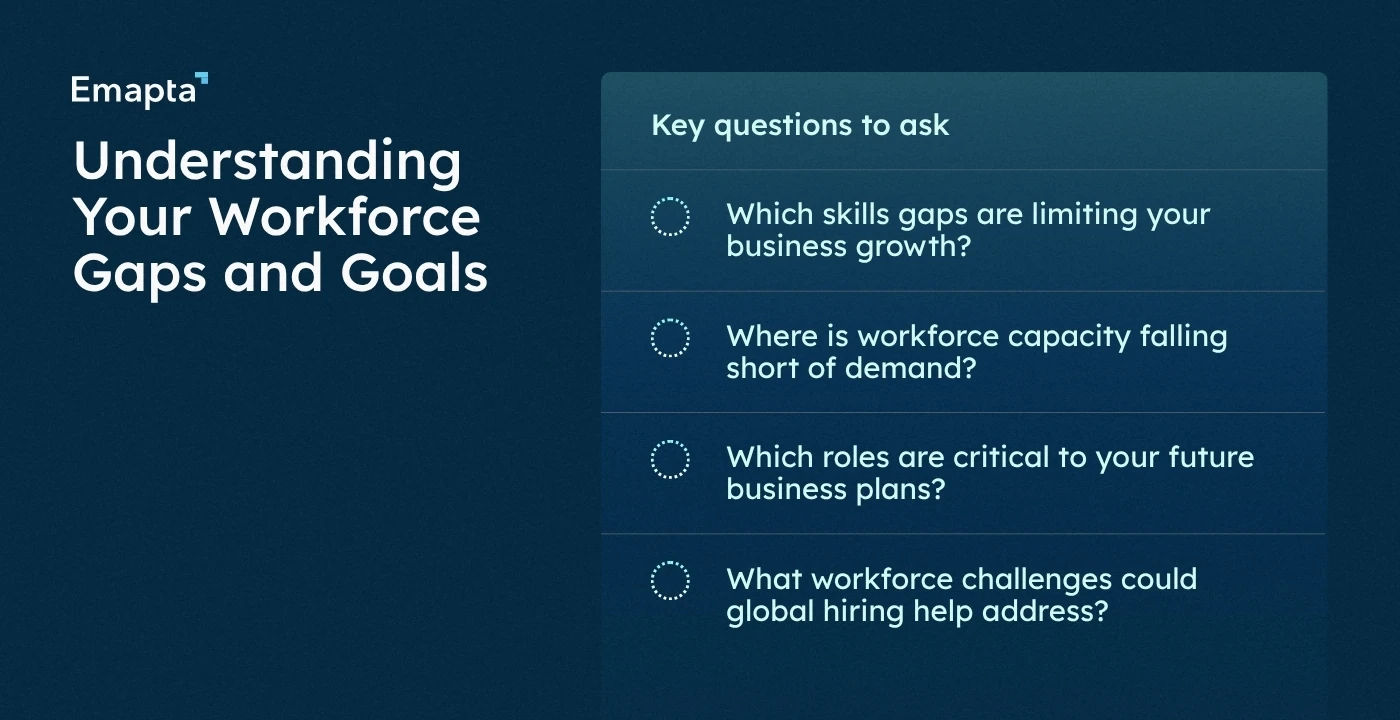
Start by evaluating your current capabilities, skills gaps, and capacity against your broader enterprise objectives. Identify where additional support is needed and what you hope to achieve by building global teams.
Step 2 – Map Out Your Workforce Strategy
Your strategy should outline how you plan to build, structure, and manage your workforce. This involves careful planning and several key decisions that will guide how you build your global workforce:
- Distribution of roles and functions across locations
- Future-state operating model, including workforce design and team structure
- Selection of countries and priority talent hubs
- Choice of workforce models, from direct hiring to outsourcing and managed services
- Decision-making authority, compliance oversight, and management responsibilities
Step 3 – Establish Your Operational Framework
After defining how things should work, you’ll need to establish the infrastructure and processes to make that possible. This includes setting up HR, payroll, and workforce management systems, implementing governance and compliance procedures, and establishing cross-border communication channels.
How these responsibilities are divided will depend on your chosen workforce models:
- Direct Employment – the enterprise hires employees through its own legal entity and handles employment administration and global workforce management
- EOR Services – the EOR legally employs workers on the enterprise’s behalf and manages local employment administration, while the enterprise oversees day-to-day work
- Outsourcing/Dedicated Staffing – the provider recruits and employs global talent, handles employment administration, and supports the enterprise’s day-to-day team management
Step 4 – Create Your Implementation Plan
Turn your workforce strategy into an actionable roadmap with clear timelines, budgets, and assigned responsibilities. Set key milestones, allocate resources, and establish how internal stakeholders and external partners will coordinate throughout the hiring and onboarding process.
Step 5 – Build and Integrate Your Global Teams
With your strategy in place, you can begin sourcing, hiring, and onboarding global talent in your chosen markets. Focus on integrating new team members into existing workflows, establishing clear expectations, and helping them collaborate effectively with the wider organization.
Step 6 – Monitor Results and Refine Your Approach
Track key workforce metrics, including productivity, retention, and operational costs, to evaluate how well your global teams are meeting business objectives. Use these insights to identify areas for improvement and continuously adjust your workforce strategy as your enterprise grows.
How to Choose the Right Countries and Talent Markets
Choosing where to build global teams requires looking beyond affordability and talent availability. You need to evaluate how each location aligns with your organization’s operational needs, workforce priorities, and long-term business goals. Several factors can help guide this decision:
- Availability of qualified professionals with relevant skills and industry experience
- Overall cost-effectiveness relative to talent quality and operational requirements
- Local employment regulations and the complexity of requirements
- Language proficiency, cultural compatibility, and time zone suitability for operational needs
- Reliable infrastructure and conditions supporting business continuity
The right location will ultimately depend on the roles being filled and what you hope to achieve. Rather than choosing international talent markets based on a single advantage, weigh these factors together to build a workforce strategy that supports both immediate needs and future growth.
[CTA Section]
See how Onnyt Global strengthened continuity by combining global talent from two locations, offshore in the Philippines and nearshore in Colombia, to support its U.S.-based real estate operations.

What Are the Biggest Global Workforce Risks?
Building global teams introduces a range of legal, operational, financial, and workforce-related risks that can become harder to manage as operations scale. Without proper planning and oversight, these challenges can affect business continuity, employee experience, and overall workforce performance. Some of the most significant ones include:
- Compliance violations – failure to meet local employment and tax requirements can result in penalties
- Data security and privacy risks – handling sensitive information across jurisdictions increases exposure to data breaches and cyberthreats
- Operational disruptions – global operations face internal and external threats to business continuity, making proactive workforce risk management essential
- Communication gaps – differences in time zones, languages, and workplace practices can lead to reduced collaboration
- Talent retention challenges – local labor market conditions and employee expectations can complicate efforts to retain skilled professionals
How to Manage Compliance Across Multiple Countries
A coordinated approach is essential to managing compliance for global teams across multiple countries, where laws, regulatory requirements, and workforce arrangements can vary significantly. Whether you handle these responsibilities internally or work with external providers, you need clear processes to maintain compliance as your company grows.
1. Identify Local Compliance Requirements
Before entering a new market, you need to understand the employment laws and regulations that apply. Local experts or service providers can help assess requirements around contracts, compensation, taxes, and statutory benefits to identify potential compliance gaps early.
2. Establish Compliance Policies
Develop clear policies that align with your organization’s standards while accommodating local regulatory requirements. These should cover key employment practices and provide a consistent framework for maintaining compliance across your global workforce.
3. Assign Compliance Responsibilities
Clearly define which compliance obligations your organization will manage, and which may be handled by third-party providers. Establishing accountability for tasks such as payroll, tax reporting, and documentation helps prevent gaps, confusion, and potential violations.
4. Monitor and Review Compliance
Regular compliance reviews should be part of your global workforce strategy, helping you identify potential gaps and stay current with regulatory changes. This includes conducting audits, updating policies, and coordinating with local partners to address emerging risks in both office-based and remote work enviroments.
How to Choose a Global Workforce Partner
Choosing the right global workforce partner involves evaluating their expertise, track record, and ability to support your enterprise organization’s long-term goals. Since providers vary in their capabilities and levels of support, it’s important to look beyond their immediate offerings.
Here’s how to evaluate potential partners and make an informed decision:
a) Identify Your Support Requirements
Determine which workforce activities you need help with and which responsibilities you want to retain.
b) Build Your Provider Shortlist
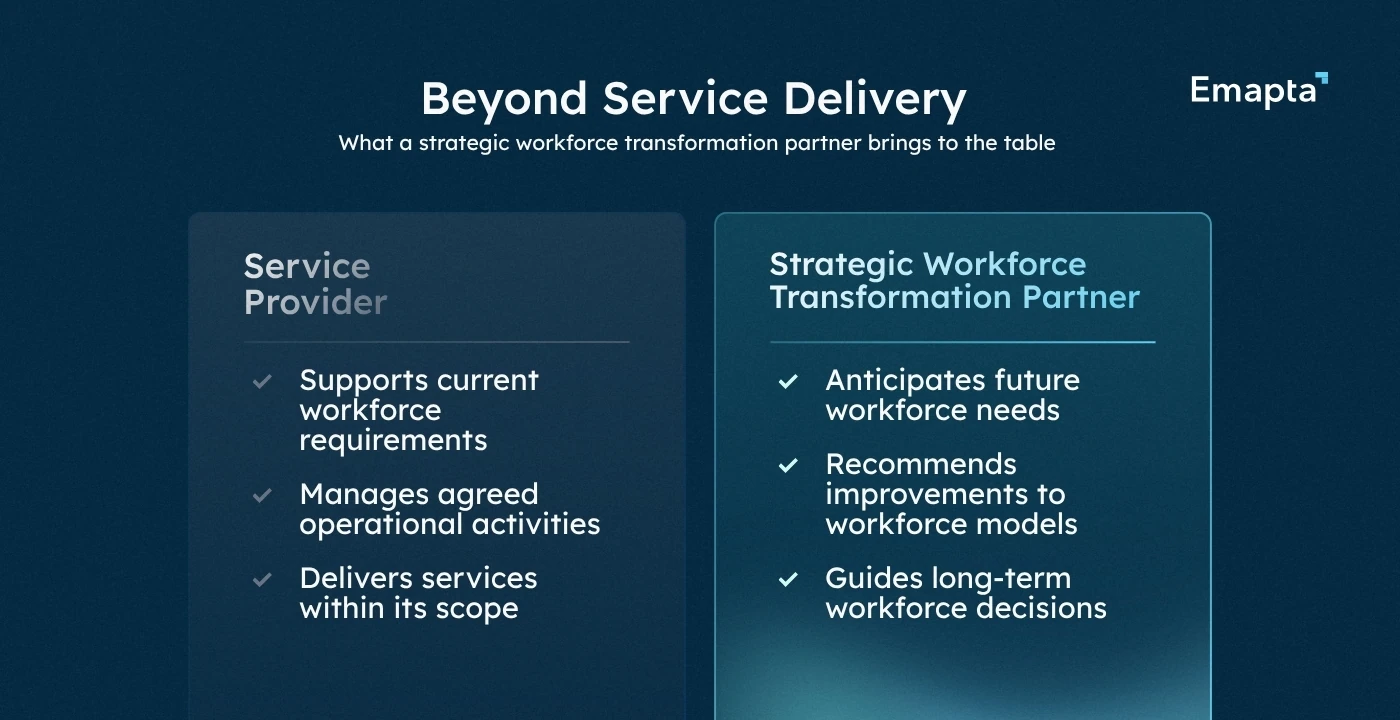
Look for providers with relevant industry experience, geographic coverage, and a proven track record. To simplify the process of building your global teams, consider a provider that also acts as a strategic partner, offering guidance beyond day-to-day workforce management.
c) Evaluate Their Service and Governance Capabilities
Assess their workforce solutions, compliance support, management practices, and ability to scale.
d) Assess Their Technology Capabilities
Evaluate the provider’s technology infrastructure, system integration capabilities, and use of AI to improve workforce operations. According to Everest Group, 44% of businesses are expanding their outsourcing scope to access AI capabilities, highlighting the growing importance of technology in global workforce partnerships.
e) Compare Proposals and Select Your Partner
Review each provider’s pricing, service commitments, accountability, and ability to support your long-term needs. Look beyond the initial cost to determine which provider offers the best overall value for your enterprise.
Wrapping Up
As enterprises become more connected across borders, building and managing a global workforce will play a greater role in long-term competitiveness. The focus will shift beyond accessing international talent to creating workforce structures that can adapt to changing business priorities, emerging skills requirements, and new ways of working.
With a well-defined global workforce strategy, you can make more informed decisions about where to find talent, how to structure your teams, and how to support them as your enterprise grows. By taking a coordinated, long-term approach, you can build a workforce that’s ready to meet both today’s demands and tomorrow’s opportunities.
Frequently Asked Questions (FAQ)
A global workforce strategy is an enterprise’s long-term plan for building, managing, and supporting teams in multiple countries. It defines how talent, skills, and responsibilities are distributed across locations to support business growth.
Enterprises build global teams by assessing their talent needs, developing a workforce strategy, and selecting suitable countries and employment models. They then establish the necessary operational systems, implement hiring and onboarding plans, and integrate international employees into existing teams. Ongoing performance monitoring helps keep the workforce aligned with business goals.
Global teams require a governance structure that establishes clear decision-making authority, accountability, and oversight across locations. This typically covers:
- Centralized policies
- Defined reporting relationships
- Local compliance responsibilities
- Consistent security standards
The structure should also clarify which responsibilities belong to the enterprise and which are handled by external workforce providers.
The primary risks of international hiring include employment law violations, compliance issues, data security threats, and operational disruptions.
To address these challenges, enterprises need a global workforce risk management approach that combines careful planning, clear governance policies, and support from qualified local or international providers.
The right model depends on your hiring needs, budget, operational requirements, and desired level of control. Popular options include:
- Direct employment – Offers greater control over hiring and management
- EOR services – Enable international hiring without a local entity
- Outsourcing/Dedicated Staffing – Provides access to global talent and specialized expertise
Enterprises can also combine these models to meet different workforce needs.