

Workforce Transformation Framework – How to Organize Change
A workforce transformation framework sets out the principles and processes organizations use when redesigning their workforce. It provides a consistent approach to evaluating, implementing, and managing interconnected changes.
When done right, it helps you avoid fragmented efforts that consume resources without contributing to broader objectives. Let’s dive into the essential pillars and potential challenges so you can develop your framework with greater confidence.
What Is a Workforce Transformation Framework?
A workforce transformation framework provides a structured approach that organizations use to intentionally redesign how their workforce operates. By shifting the focus from reactive hiring to long-term capability building, it guides changes to roles, skills, and ways of working to meet evolving business needs.
To put these changes into practice, the framework establishes clear principles, processes, and responsibilities for coordinating implementation across the organization. This provides a consistent basis for managing key aspects of workforce transformation, such as:
- Integrating new technologies
- Allocating resources effectively
- Supporting employees through transitions
- Measuring progress over time
Workforce Transformation Framework vs Strategy
A workforce transformation strategy answers what an organization wants to achieve and why. A framework focuses on how those ambitions can be put into practice through a structured approach. While each serves a distinct purpose, they complement one another.
A clear strategy doesn’t automatically translate into effective execution. Even when the overall objectives remain unchanged, organizations may need to reconsider their approach as new challenges emerge or initial initiatives fall short.
This is where a workforce transformation framework becomes valuable, allowing implementation to evolve without requiring a complete shift in strategic direction.
| Aspect | Workforce Transformation Strategy | Workforce Transformation Framework |
|---|---|---|
| Core Focus | Vision and business alignment: Defines the long-term goals and required changes | Execution and structure: Provides the repeatable steps, tools, and methodologies |
| Key Question | “Where is our business going, and what kind of workforce do we need to get there?” | “What exact steps, metrics, and processes will we use to manage change?” |
| Sample Elements | Business goals, competitive positioning, high-level milestones | Change readiness assessments, decision-making protocols, feedback mechanisms |
| Adaptability | Adjusted when business goals or priorities shift | Refined as implementation challenges and new insights emerge |
Why Do Organizations Need a Structured Transformation Framework?
Changing how work gets done often affects multiple areas of an organization, making the process difficult to manage through isolated initiatives. A structured workforce transformation framework helps bring these efforts together, establishing clear standards while reducing the risk of misalignment and disruption.
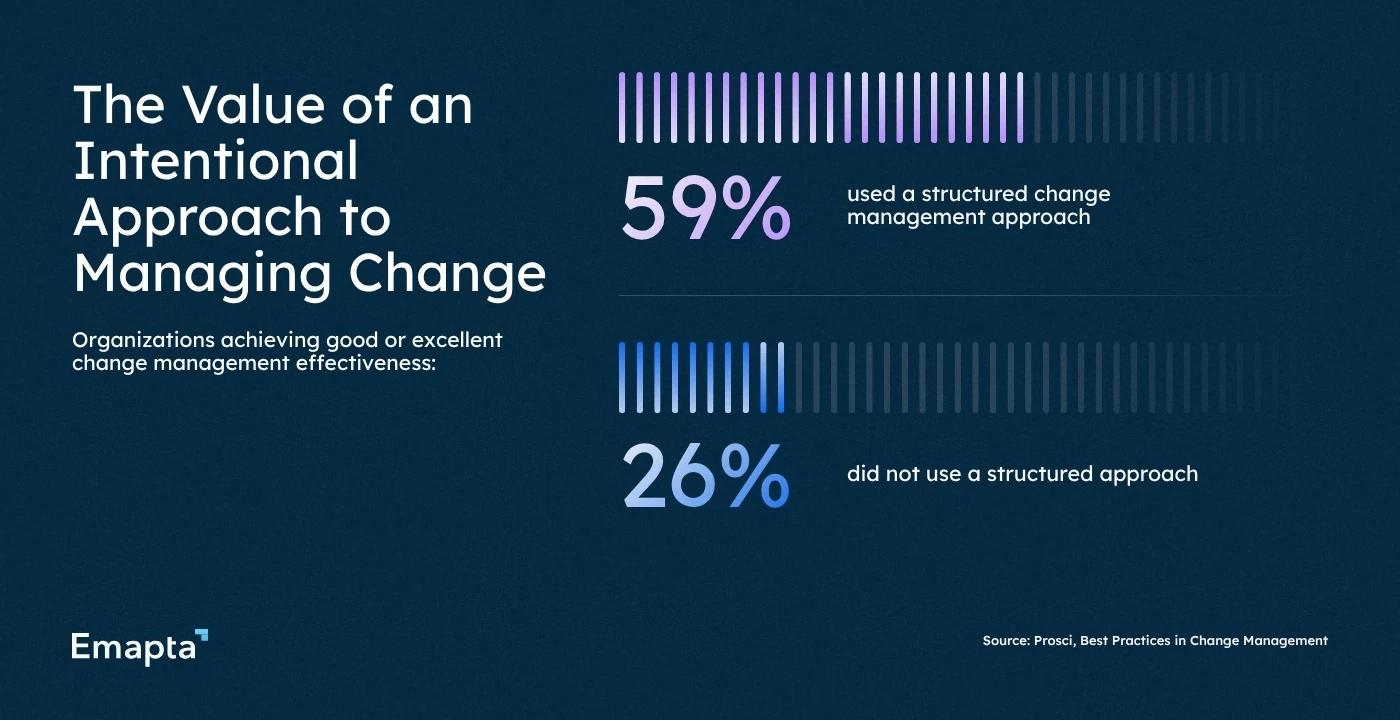
This need for structure is also reflected in change management research. Prosci found that 59% of organizations using a defined methodology achieved good or excellent levels of change management effectiveness, highlighting the importance of a well-defined process when implementing organization-wide changes.
At the enterprise level, a workforce transformation framework becomes particularly valuable as different business units may have distinct priorities and varying levels of readiness for change. This allows organizations to adapt their approach to specific operational needs while maintaining consistency as initiatives scale.
The 6 Pillars of a Workforce Transformation Framework
To manage workforce transformation effectively, you need to identify the essential areas that contribute to its overall success. By organizing your framework around these key pillars, you can avoid overlooking important factors that influence implementation.
1. Comprehensive Skills and Capability Assessment
Before making changes to your workforce, you need a clear understanding of the skills and capabilities already available within your organization. This assessment allows you to identify gaps and model how workforce transformation could affect existing roles and future talent requirements.
What It Delivers
- A reliable inventory of existing workforce skills and capabilities
- Consistent criteria for assessing employee competencies
- Clear visibility into current and potential skills gaps
2. Clear Decision Rights and Accountability
Large-scale organizational changes often involve competing priorities and decisions with far-reaching consequences, making it important to establish who has the authority to act and who is responsible for results.
A clear governance structure, with designated decision-makers and approval processes, helps you manage dependencies between initiatives and address issues that require cross-functional coordination.
What It Delivers
- Defined oversight checkpoints to incorporate into your workforce transformation roadmap
- Clear performance expectations tied to individual and departmental responsibilities
- Documentation standards for recording key decisions and their rationale
3. Workforce Redesign Standards
Workforce redesign standards provide consistent criteria for evaluating changes to existing roles and how work is distributed across your organization. This pillar of workforce transformation helps you assess whether proposed adjustments are practical and identify potential gaps or overlaps before implementation.
What It Delivers
- Standardized criteria for evaluating proposed role and structural changes
- Updated role profiles reflecting revised responsibilities and skill requirements
- Consistent methods for assessing the impact of redesigned workflows
4. Technology Enablement Guidelines
AI continues to reshape how work gets done, making technology enablement an essential component of your workforce transformation framework. As automation changes the nature of certain roles, you need clear criteria for deciding which technologies to adopt and how they should fit into existing workflows.
These decisions should also account for employee readiness and the support required to make new tools part of everyday operations.
What It Delivers
- Defined boundaries for tasks handled by AI versus human employees
- Interoperability requirements for connecting new tools with existing systems
- Defined requirements for data security and responsible technology use
Get insights on building a dedicated AI team that can help you scale technology initiatives beyond the pilot stage.

5. People-Centered Change Management Plan
Even well-planned workforce changes can face resistance when employees are unprepared for new responsibilities or unfamiliar ways of working. Your framework should also account for the human side of workforce redesign, with clear communication and ongoing support to help employees adapt to new responsibilities.
What It Delivers
- Consistent methods for assessing employee readiness for change
- Targeted training and support based on transition requirements
- Established communication channels for addressing concerns and gathering feedback
6. Mechanisms for Continuous Improvement
Workforce transformation doesn’t end once new processes and ways of working are introduced. You need established methods for reviewing results, identifying areas that need attention, and making adjustments based on what you learn throughout implementation.
What It Delivers
- Consistent metrics for measuring the long-term impact of workforce transformation
- Feedback mechanisms for identifying emerging issues and improvement opportunities
- Corrective action procedures for addressing performance gaps
Common Framework Implementation Mistakes
A framework that looks effective on paper may not always translate smoothly into daily operations. Recognizing common implementation mistakes can help you bridge that gap and adjust before problems become harder to resolve.
a) Applying a One-Size-Fits-All Approach
Applying the same methodology across every department can limit the effectiveness of workforce transformation, particularly when operational requirements and levels of readiness differ. Consider where you can adapt processes to meet specific needs without compromising consistency across your organization.
b) Relying on Incomplete Workforce Data
When workforce decisions rely on outdated skills records or incomplete assessments, you risk overlooking capabilities your employees already have and creating gaps you didn’t anticipate. Make sure your assessment methods draw on reliable, up-to-date information that reflects what employees can actually do, not just what their job titles suggest.
c) Failing to Test the Framework Before Scaling
Rolling out a workforce transformation framework across your entire organization without testing it first can expose you to problems that could have been addressed on a smaller scale. Consider piloting it within a department or business unit to identify gaps in your processes and make adjustments before expanding its use.
d) Treating Technology Adoption as Transformation
Introducing new technology doesn’t automatically mean your organization has undergone meaningful transformation. Look at whether these tools have improved existing workflows or simply added another layer to how employees perform their tasks.
e) Leaving Employees Out of the Process
A workforce transformation framework developed without employee input can overlook practical challenges that may only become apparent during implementation. Involve the people affected early in the process and use their feedback to identify concerns, refine proposed changes, and encourage greater acceptance.
f) Overlooking Opportunities for Improvement
What works during the early stages of transformation may not be as effective when new challenges emerge or priorities shift. Make continuous refinement part of your approach by reviewing implementation feedback and adjusting processes so lessons from one initiative can improve how the next is managed.
Wrapping Up
The real test of transformation isn’t how ambitious your plans are, but how well they hold up when you start putting them into practice. Making lasting progress means knowing when to stay consistent with your approach and when it’s time to rethink what isn’t working.
By developing a framework that balances consistency with flexibility, you can make workforce transformation a more coordinated and sustainable effort across your organization. Beyond the improvements you introduce, what matters is what it allows your people to accomplish.
Frequently Asked Questions (FAQ)
A workforce transformation framework is a structured approach that organizations use to manage and implement changes to their workforce. It establishes the principles, processes, and standards that guide workforce redesign while maintaining consistency across different initiatives. What are the pillars of workforce transformation?
The key pillars of a workforce transformation framework are skills and capability assessment, decision rights and accountability, workforce redesign standards, technology enablement, change management, and continuous improvement. Together, they provide the structure needed to manage different aspects of organizational change. What is the difference between a workforce transformation framework and strategy?
A workforce transformation strategy defines an organization’s vision, priorities, and overall approach to workforce changes. A framework provides the standards and mechanisms for managing those changes consistently, helping organizations translate their strategic direction into practice. What are the stages of workforce transformation?
Common workforce transformation stages include assessing current capabilities, defining the future workforce, planning initiatives, implementing changes, and evaluating results. The specific sequence depends on the organization’s priorities and readiness, with the workforce transformation roadmap outlining activities and timelines. How do you measure workforce transformation progress?
Workforce transformation progress is measured using metrics tied to the organization’s objectives. Examples include skills gap reduction, employee adoption rates, and workforce performance. Regular reviews help determine whether initiatives are delivering the intended outcomes and where adjustments are needed.