How Enterprise Companies Solve Critical Skills Gaps Without Hiring Full-Time Employees
The skills your enterprise needs next may not be the skills your workforce has today, creating gaps that can disrupt priorities and limit your ability to respond to changing market conditions.
As demand for specialized expertise grows, the stronger response is not always to add permanent headcount, but to rethink how and where capability is built. Flexible workforce models and skills-building initiatives can give you more ways to access the right talent.
Let’s take a closer look at the options available so you can support both immediate and longer-term skill needs without making full-time hiring the default.
What Is an Enterprise Skills Gap?
A skills gap is the difference between the capabilities an organization has today and the skills it needs to meet strategic goals and keep pace with evolving operational demands. These shortfalls can affect several areas of the business, including:
- Consistency of service delivery
- Adoption of new technologies
- Continuity across critical functions
- Progress on key priorities
When multiple areas are affected at once, the impact becomes more significant. In fact, 63% of employers identified critical skills gaps as the primary barrier to business transformation for the 2025–2030 period, according to the World Economic Forum.
For enterprises, the challenge is often coordinating a response across a larger and more complex set of business functions, making skill development and deployment harder to manage at scale.
Why Are Critical Skills Gaps Becoming Harder to Fill?
Across industries, skills gaps are becoming harder to fill because demand for specialized capabilities is changing faster than organizations can source or develop them. Employee retention also becomes essential, since losing people with in-demand skills can deepen existing shortages just as demand continues to rise.
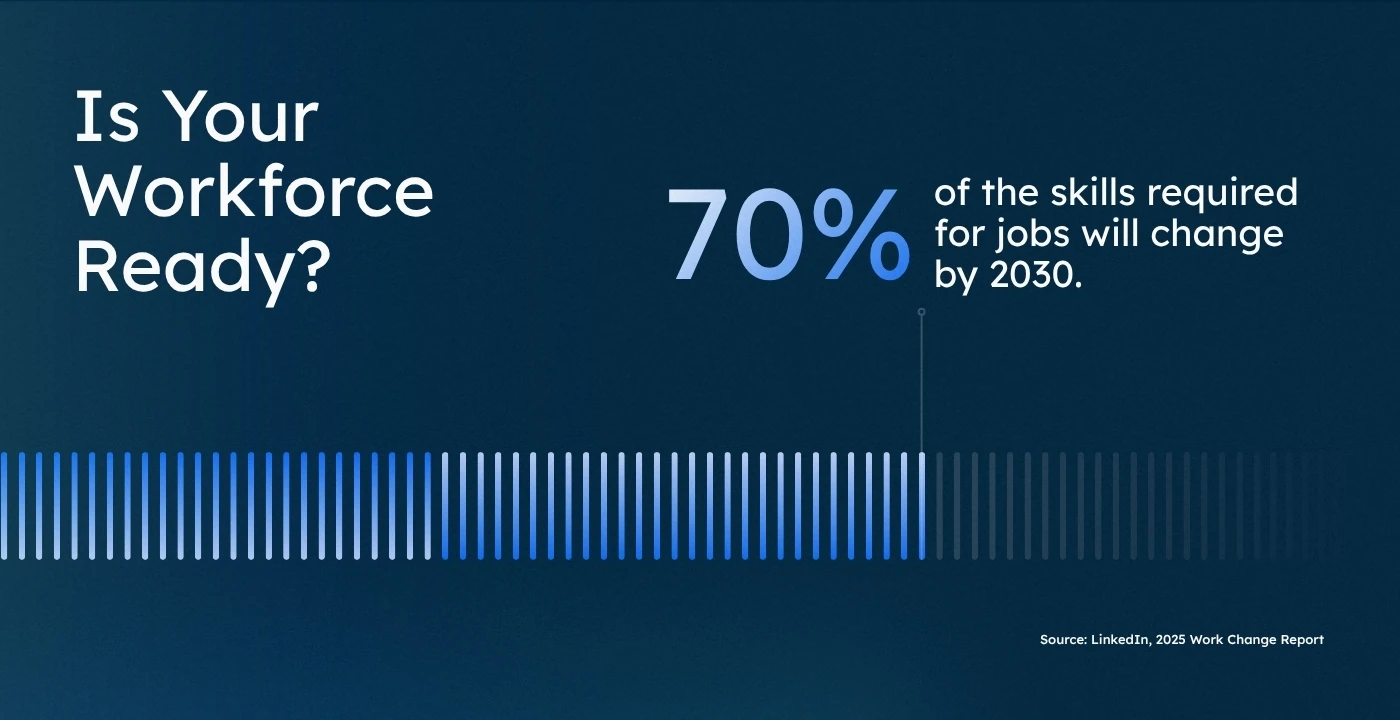
That pressure is likely to intensify in the coming years. In their 2025 Work Change Report, LinkedIn estimates that 70% of the skills required for jobs will change by 2030, making it harder for organizations to rely on traditional full-time hiring alone to keep pace with future skill needs.
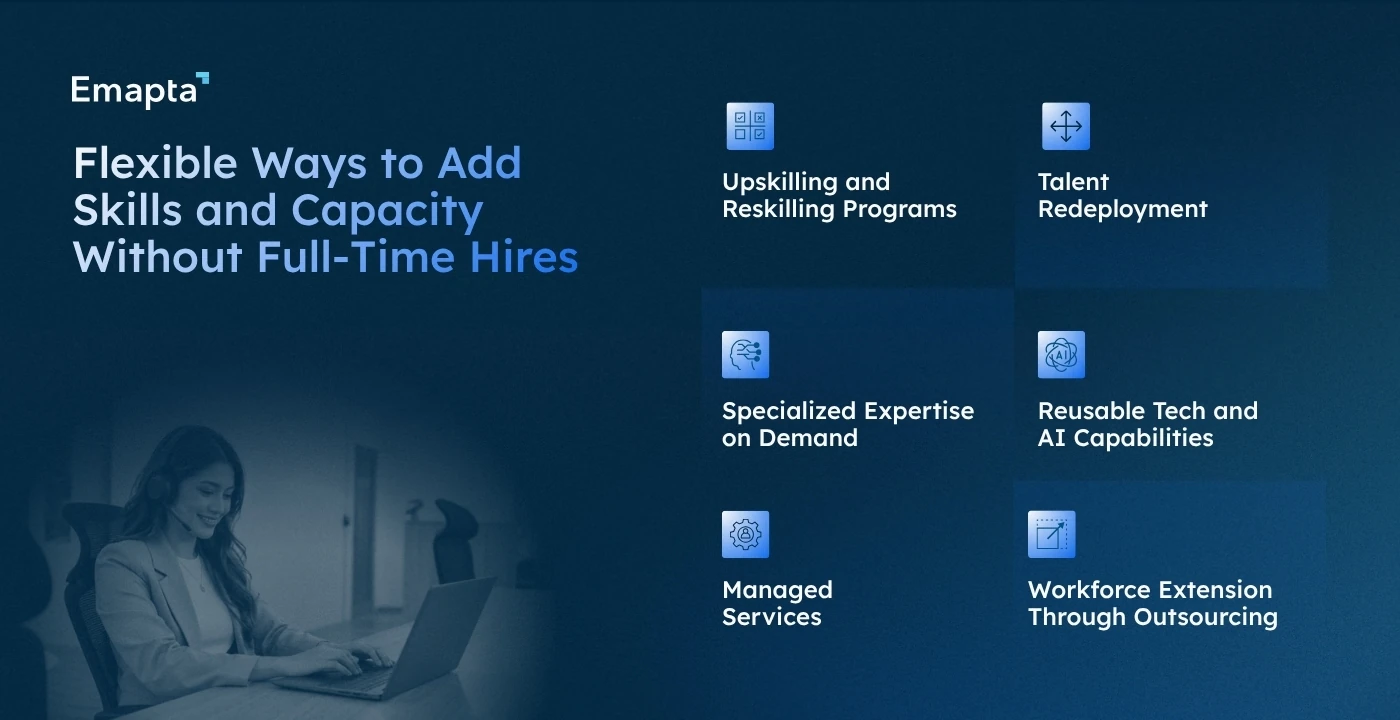
6 Ways Enterprises Can Close Skills Gaps Without Hiring Full-Time Employees
Building the skills your enterprise needs does not always mean adding permanent full-time employees, especially when doing so would be too costly or inflexible. In some cases, targeted changes to workforce development may be enough, while others call for broader workforce transformation to bring in new capabilities, added capacity, or different ways of working.
1. Prioritize Upskilling and Reskilling Programs
Upskilling and reskilling can be effective skills gap solutions because they build on the talent you already have and extend the capabilities available within the organization. Investing in upskilling initiatives strengthens employees’ capabilities for their current roles, while reskilling prepares them to take on different responsibilities as business needs shift.
What It Enables
- More employees equipped to handle higher-skill or evolving responsibilities
- Stronger internal pipelines for capabilities the business will need next
- Better continuity when roles change or new skill requirements emerge
2. Redeploy Talent Where Skills Are Needed Most
Redeploying talent involves moving existing employees into areas where their skills can create more value or where shortages are putting pressure on delivery. Instead of hiring for every new need, you can shift people across roles, functions, or projects based on current priorities and the capabilities they already bring.
Of course, this approach still requires the right role fit, enough transferable capability, and support for new responsibilities, especially when deciding how to close skills gaps through internal mobility.
What It Enables
- Faster response to skill shortages in priority areas
- Better use of existing talent across the organization
- More opportunities to retain employees through internal mobility
3. Bring In Specialized Expertise on Demand
Another way to address talent shortages across your enterprise is to bring in contractors, freelancers, or interim specialists for specific needs. This gives you access to specialized expertise without creating a permanent role, which can be especially useful for periods of unusually high demand.
What It Enables
- Broader access to talent beyond your immediate hiring market
- Flexibility to support short-term or project-based needs
- Faster access to niche or hard-to-find expertise
4. Build Reusable Technology and AI Capabilities
This skills gap solution entails creating tools, workflows, and systems that can solve recurring needs across the organization instead of relying on people to handle each task manually. AI and automation can support this by taking on repeatable work and extending what existing in-house employees can accomplish.
When designed well, these capabilities can reduce pressure on scarce talent and free employees to focus on work that requires more judgment or specialized knowledge.
What It Enables
- Less pressure on employees with scarce or specialized skills
- More time for higher-value work that requires judgment
- More consistent execution of repeatable work
5. Use Managed Services as a Capability Multiplier
Managed services give organizations access to specialized support and established processes without having to build everything internally, making them a practical way to address an enterprise skills gap. Under this model, an external provider takes responsibility for delivering a defined function or scope of work against agreed service expectations.
What It Enables
- Predictable delivery through defined service levels
- Less internal effort spent managing day-to-day execution of the function
- Access to provider-owned tools, methods, and operational expertise
6. Extend Your Workforce with an Outsourced Team
Outsourcing solutions tailored to enterprises let you address skills gaps by adding people who may work full-time schedules without hiring them as full-time employees of your company. Instead, they are employed through an external provider, giving you access to additional capacity and skills without expanding your direct headcount.
What It Enables
- Extended coverage across functions, workloads, or time zones
- Operational support from people who work alongside internal employees
- More internal focus on work that needs to remain in-house
How to Choose the Right Workforce Model for Each Skills Gap
A workforce model defines how your organization structures access to the people, skills, and support needed to get work done. The right choice depends on a few decision factors, including the nature of the skills gap, how the work will be managed, how closely it needs to integrate with your operations, and how long the need is expected to last.
1. Start With the Gap You Need to Solve
Identify whether the enterprise skills gap comes from missing expertise, limited capacity, or both, and whether the need is temporary or ongoing. That distinction can quickly rule out approaches that are either too short-term or too resource-intensive for the problem at hand.
2. Consider How Much Management You Can Take On
Some workforce models give your leadership more control over day-to-day work, while others place greater responsibility on an external provider. Be realistic about the time, systems, and leadership capacity available for managing remote teams or external support.
3. Determine How Closely the Work Needs to Integrate with Your Business
Consider whether the people doing the work need to operate as an extension of your in-house team, use your systems, and stay closely involved in daily workflows. This can be especially important when responding to a talent shortage, where external support may need to integrate closely with existing enterprise operations rather than work at arm’s length.
4. Match the Model to the Length and Scale of the Need
A short-term need for one specialist calls for a different approach than an ongoing requirement for several roles or sustained functional support. The expected duration and scale can help determine how much structure and commitment the model should involve.
How Dedicated Teams Provide Long-Term Access to Specialized Talent
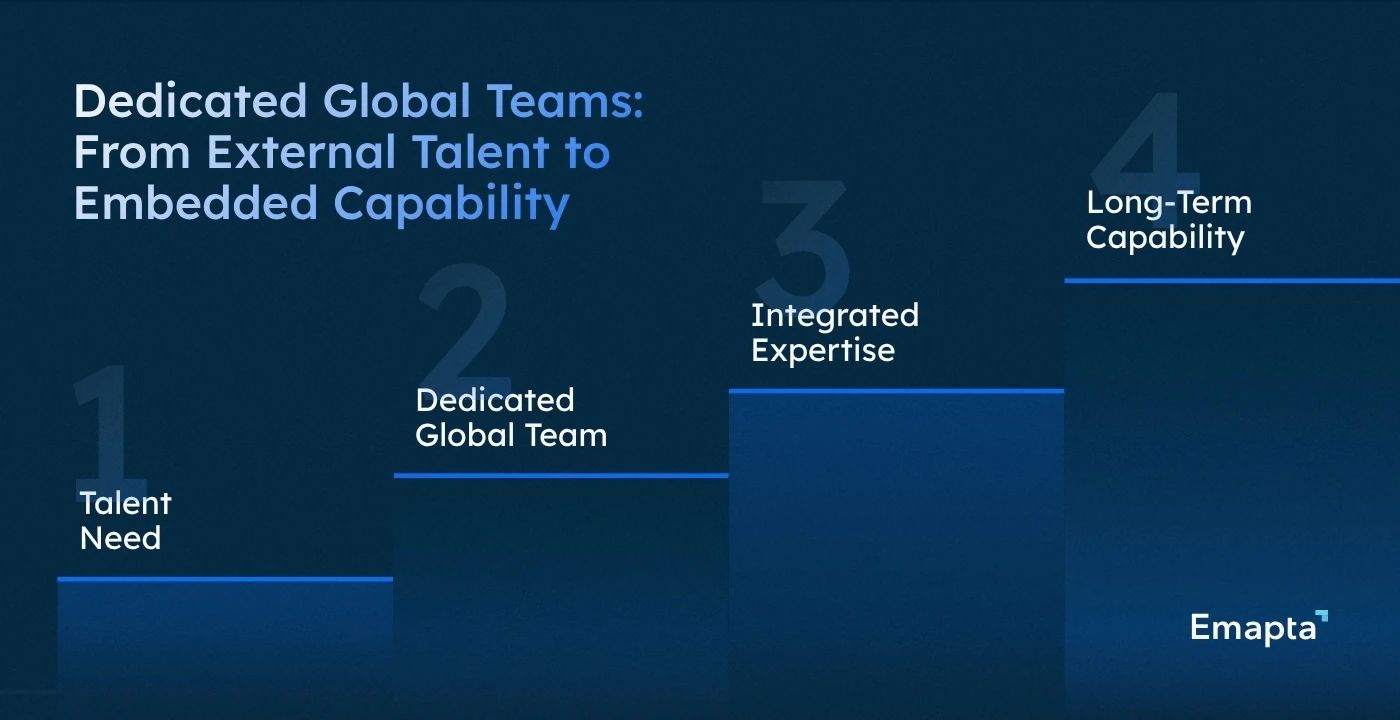
Dedicated staffing gives enterprises a way to build sustained access to specialized talent without relying on repeated hiring cycles. It’s an outsourcing model that provides professionals who work exclusively for your business, rather than being shared across multiple clients, allowing them to work as a seamless extension of your operations.
Because the relationship is designed for continuity rather than short-term project support, dedicated global teams can help build long-term workforce capabilities while addressing skills gaps in several ways:
- Exclusive allocation of talent to your organization
- Longer-term role continuity beyond project-based engagements
- Direct integration into your workflows, systems, and ways of working
- Ongoing knowledge retention within the dedicated team
- Ability to retain specialized expertise as requirements evolve
Wrapping Up
As skills needs continue to shift, enterprises will need workforce strategies that can adapt just as quickly without defaulting to permanent hiring for every need. The organizations best positioned for what comes next will be those that build flexibility into how they access, develop, and deploy talent over time.
For your business, that means looking beyond a single solution and thinking more deliberately about where different workforce models fit in your response to an enterprise skills gap. What matters most is having enough range in your talent strategy to respond to change without rebuilding your approach from scratch each time.
Discover how World Class Knowledge built scalable client solutions with dedicated global teams.